
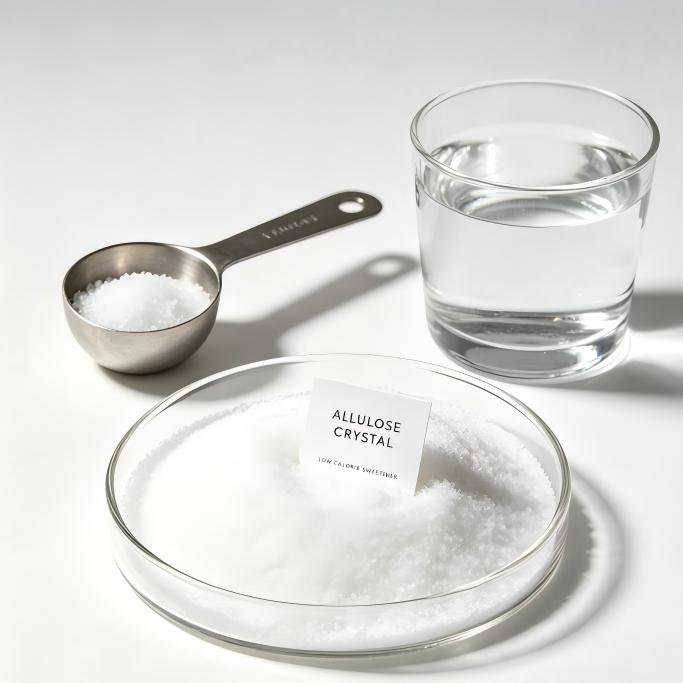
If you’re cutting sugar but refuse to compromise on taste, you’ve probably scrolled through endless sweetener options: stevia’s bitter aftertaste, monk fruit’s overpowering sweetness, and artificial sweeteners’ questionable long-term effects. But there’s one game-changing natural sweetener that’s rapidly taking over the health food space—allulose.
Often called the “perfect sugar substitute,” allulose delivers the exact taste, texture, and baking properties of regular table sugar, with almost none of the downsides. In this post, we’ll break down everything you need to know about allulose: what it is, why it’s better than traditional sugar and other sweeteners, its science-backed health benefits, real-world uses, and the few caveats to keep in mind for safe daily use.
What Exactly Is Allulose?
Allulose (also known as D-psicose) is a rare natural sugar found in tiny amounts in everyday foods like dried figs, raisins, maple syrup, and even some fermented foods. Structurally, it’s an epimer of fructose, meaning it shares nearly the same molecular makeup as regular sugar—but our bodies process it completely differently.
Unlike sucrose (table sugar) which is fully metabolized and stored as calories, allulose is barely absorbed by the human body. It contains just<0.4 kcal per gram, nearly 90% fewer calories than regular sugar. For labeling purposes, it qualifies as a zero-calorie sweetener in most regions, making it a favorite for low-sugar, low-calorie diets.
Crucially, allulose is not an artificial sweetener. It’s a natural sugar, just one that our metabolism doesn’t utilize for energy or fat storage.
Key Benefits: Why Allulose Stands Out From Other Sweeteners
1. Zero Net Calories & No Weight Gain Risk
The biggest draw of allulose is its ultra-low calorie profile. While most sweeteners either pack full calories (sugar, honey) or taste artificial (sucralose, aspartame), allulose offers the best of both worlds. Since the body does not metabolize it for energy, it does not contribute to body fat accumulation, weight gain, or excess calorie intake—making it ideal for weight management and maintenance.
2. Stabilizes Blood Sugar & Improves Glycemic Health
For anyone prediabetic, living with type 2 diabetes, or simply watching their blood sugar spikes, allulose is a total game-changer. Multiple clinical trials confirm that allulose produces no significant rises in blood glucose or insulin levels.
Even better, research shows it has active glycemic benefits: adding just 5–10 grams of allulose to high-sugar meals can lower post-meal blood sugar peaks. A meta-analysis of randomized controlled trials found regular allulose intake reduces both fasting blood sugar and post-meal glucose levels, supporting long-term metabolic health.
3. Identical Sugar Taste & Perfect Baking Performance
Most alternative sweeteners fail in the kitchen. Stevia leaves a bitter aftertaste, erythritol crystallizes oddly, and artificial sweeteners can’t caramelize or brown. Allulose, however, mimics sugar’s properties flawlessly.
It is approximately 70% as sweet as table sugar, delivers a clean, pure sweet flavor with no aftertaste, and supports caramelization, browning, and bulk texture in baked goods, beverages, and sauces. It’s heat-stable, shelf-stable, and works in every recipe where you’d normally use sugar—from cookies and cakes to iced coffee and homemade jams.
4. Tooth-Friendly & Antioxidant Properties
Unlike regular sugar, allulose does not feed oral bacteria or promote tooth decay and cavities. It’s widely recognized as a non-cariogenic sweetener, protecting dental health for both adults and kids. Additionally, scientific studies highlight its mild antioxidant and antimicrobial effects, adding subtle wellness perks to daily consumption.
5. Clean Label & Gut-Friendly in Moderation
As a natural rare sugar, allulose qualifies for clean-label product labeling, a huge plus for health-conscious consumers and food brands. Unlike many sugar alcohols, it has excellent digestive tolerance at standard serving sizes, with minimal gut discomfort for most people.
Allulose vs. Other Common Sweeteners: Quick Comparison
Still unsure how allulose stacks up against your go-to sweetener? Here’s a simple breakdown:
- White Sugar: Full calories, spikes blood sugar, causes weight gain and dental issues, poor for metabolic health.
- Stevia/Monk Fruit: Zero calories, but bitter/odd aftertaste, poor baking performance, overly intense sweetness.
- Erythritol: Zero calories, but may cause bloating, no caramelization effect, unnatural cooling aftertaste.
- Artificial Sweeteners (Sucralose/Aspartame): Zero calories, artificial formulation, potential long-term health concerns, poor flavor profile.
- Allulose: Near-zero calories, sugar-like taste and texture, blood sugar-friendly, natural, bakeable, tooth-safe.
Practical Uses of Allulose in Daily Life
Allulose’s versatility makes it easy to integrate into your daily routine with zero learning curve:
- Hot & Cold Beverages: Sweeten coffee, tea, smoothies, and iced drinks without caloric guilt or weird aftertastes.
- Baking & Desserts: Perfect for cookies, muffins, brownies, and cakes—it browns and crisps just like sugar.
- Savory Cooking: Works in marinades, sauces, dressings, and glazes for balanced sweetness without excess sugar.
- Daily Table Sweetener: Use as a direct replacement for sugar at the breakfast table for cereal, yogurt, and oatmeal.
Potential Side Effects & Safe Daily Dosage
Allulose is generally recognized as safe (GRAS) for long-term daily use, and most people tolerate it extremely well. That said, excessive single servings can cause mild gastrointestinal discomfort (bloating, gas, or mild diarrhea) in sensitive individuals.
To avoid side effects, stick to the clinically recommended safe dosage: approximately 0.4g of allulose per kilogram of body weight per day. For most adults, 5–10g per meal is completely risk-free and well-tolerated.
Unlike sugar alcohols, allulose’s gut side effects are rare at normal consumption levels, and it does not cause long-term gut disruption with regular moderate use.
Final Thoughts: Is Allulose Worth Adding to Your Diet?
After reviewing the science, taste profile, and real-world usability, the answer is a resounding yes.
Allulose fills a long-empty gap in the sweetener market: it’s natural, zero-calorie, sugar-tasting, baking-friendly, and metabolically beneficial. It lets you enjoy sweet foods and drinks daily without the blood sugar spikes, weight gain, and health risks of refined sugar.
If you’re tired of sacrificing taste for health, allulose is the sustainable, science-backed sweet solution you’ve been waiting for. It’s not just a temporary diet trend—it’s the future of clean, healthy sweetening.